Every single day, no matter where you are, there are stories unfolding that most people will never hear. For Santé staff members, these untold stories often take place during moments of crisis or within conversations at our wellness centers. In these ever-changing situations, there is the potential to change the course of someone’s life.
Much of this work happens out of the spotlight; and intentionally so. The individuals we serve are often navigating some of the most vulnerable moments of their lives. Protecting their privacy is both our priority and our responsibility, which is why many of the most powerful stories remain untold.
Still, these stories of heroism, bravery, and compassion are unfolding every day.
Each year, Santé teams respond to over 15,000 crisis cases and handle more than 120,000 calls across our crisis lines and services. Behind every number is a person and a decision to reach out for help.
As Santé board member, Noah Smock shared, the people doing this work are often “like superheroes without the acclaim… doing really hard work behind the scenes.” That description rings true. Every day, clinicians, peer support specialists, crisis responders, and care coordinators step into complex and emotional situations with one goal: to help.
The intention is not to be seen, celebrated, or praised, but to show up when it matters most.
For Noah Smock, that idea of being “the helpers” is the reason he chose to become part of this work.
When Noah first learned about Santé, it was through the nonprofit community he was already part of. His professional background had taken him through many areas of the sector, yet mental health and crisis care had not been one of them. Still, something about the mission felt familiar.
“The mission really resonated with some of my own personal experiences,” he shared. That connection sparked a desire to learn more and ultimately led him to join the board, where he could contribute in a meaningful way.
As he began to understand the scope of Santé’s work, what stood out most was the way the organization approaches care.
“Communities can’t be healthy unless we have strong mental health resources within them,” he explained.
That belief is rooted in his own lived experience. Growing up in a rural community, Noah saw firsthand how mental health was often left unspoken. Support existed, but it was not always visible or accessible in the way people needed.
“There was a stigma around mental health care where I grew up,” he shared. “It wasn’t necessarily ridiculed, but it just wasn’t talked about.”
That silence left gaps in understanding, in access, and in the ability for people to seek help without hesitation.
Looking back, Noah recognizes how different things could have been with greater awareness.
“If it had been more visible and acceptable, I think a lot of people would have had an easier time,” he said.
Today, that perspective shapes how he shows up in his role at Santé. Beyond governance, he sees a clear responsibility to help tell the story of the work being done.
“The responsibility comes down to finding the right outlets and actually telling the story,” he shared.
Not to spotlight individual experiences, but to ensure that more people understand that help exists.
There is a strong desire to share the impact of Santé and tell stories of transformation, resilience, and hope. At the same time, there is an equally strong commitment to protecting the individuals at the center of those stories.
In this work, we are always reminded that people are not stories to be told, but individuals to be supported.
This may look like answering a call in the middle of the night and staying on the line until someone feels safe again. In 2025, across all the regions we serve, Santé had a 98.4% connection rate where callers were either linked with help or given resources.
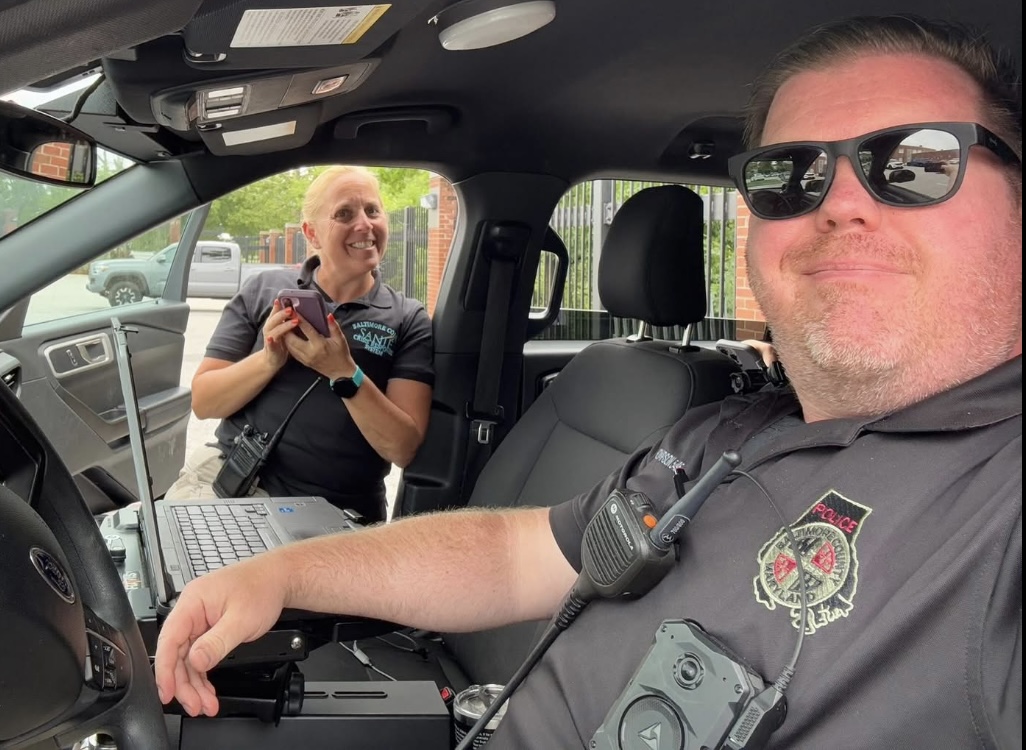
It may also look like meeting someone where they are by providing in-person support through mobile crisis response. Each year, teams complete thousands of mobile crisis dispatches, stepping directly into communities to provide care in real time.
While these moments may not always be shared publicly, their impact is lasting. They ripple outward, affecting families, communities, and entire systems of care.
This is what it means to be a helper.
Noah envisions a time when the name Santé is immediately recognized in the communities it serves. A time when individuals do not have to search for help because they already know where to turn.
Until then, the work continues. Conversations continue, and awareness continues to grow.
Every time someone shares what Santé does, explains how crisis services work, or helps someone understand that support is available, they bring visibility to something that has too often been hidden.
The truth is that the impact of this work is not defined by how many stories are told, it is defined by how many people are helped.
While the full picture may not always be visible, the work is happening. The helpers are there, and in moments that may never be shared, lives are being changed.
